
Area III-Planning Reserve


Council Approved: Consideration of a motion to determine if there is sufficient community need as defined in the Boulder Valley Comprehensive Plan to warrant further consideration of a Service Area Expansion Plan for the Area III-Planning Reserve
Date of Vote: February 12, 2026
Vote: Approved (7-2)
What Happened
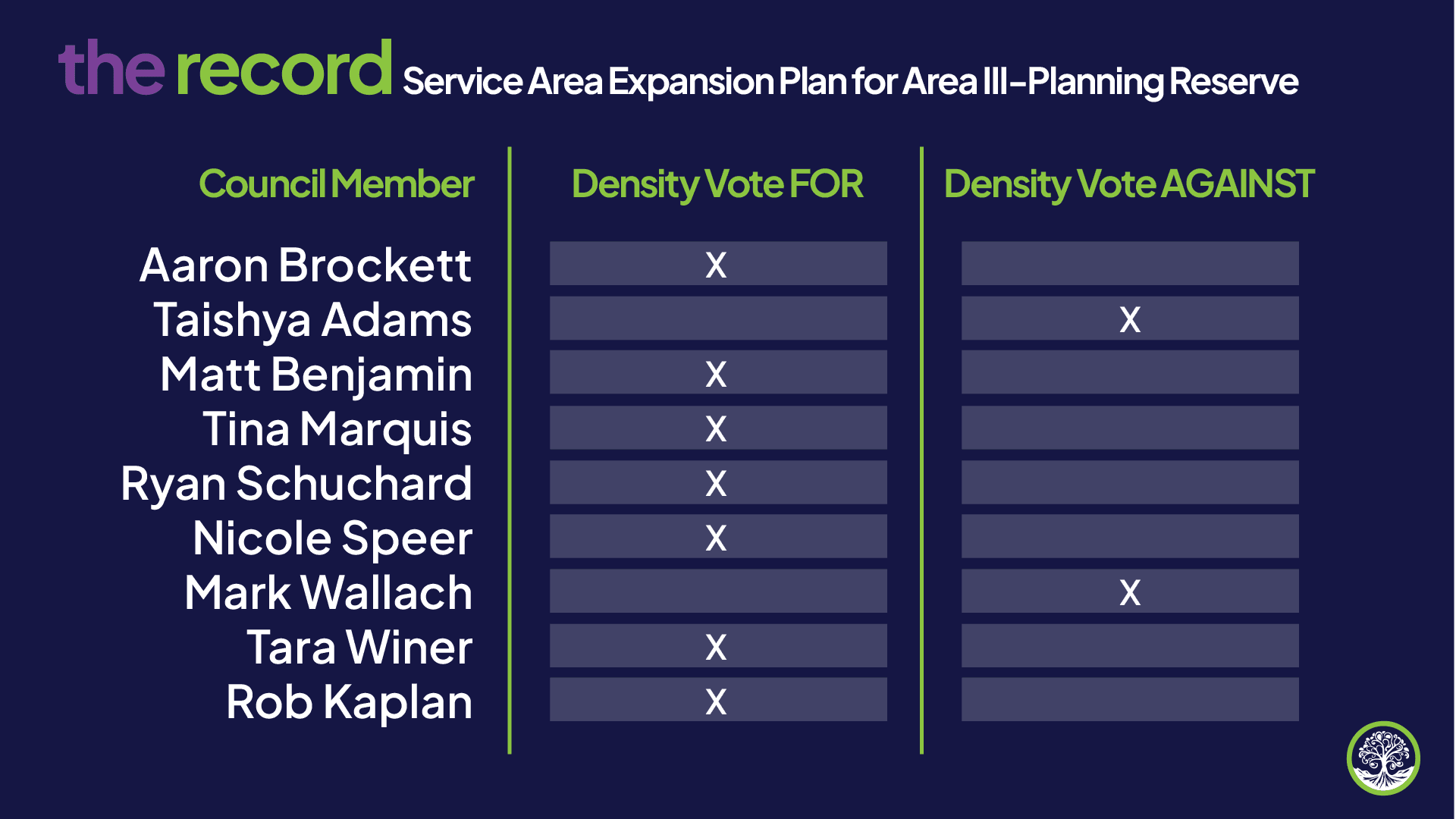
City Council held a special meeting on February 12 to decide whether Boulder should continue studying a potential future expansion of city services into the Area III Planning Reserve. This vote did not approve development or expansion, it determined whether staff should continue studying expansion as a long-term option. If pursued in the future, expansion areas could potentially accommodate up to 8,700 housing units. Council voted 7–2 to continue the study, with Council members Adams and Wallach voting no.
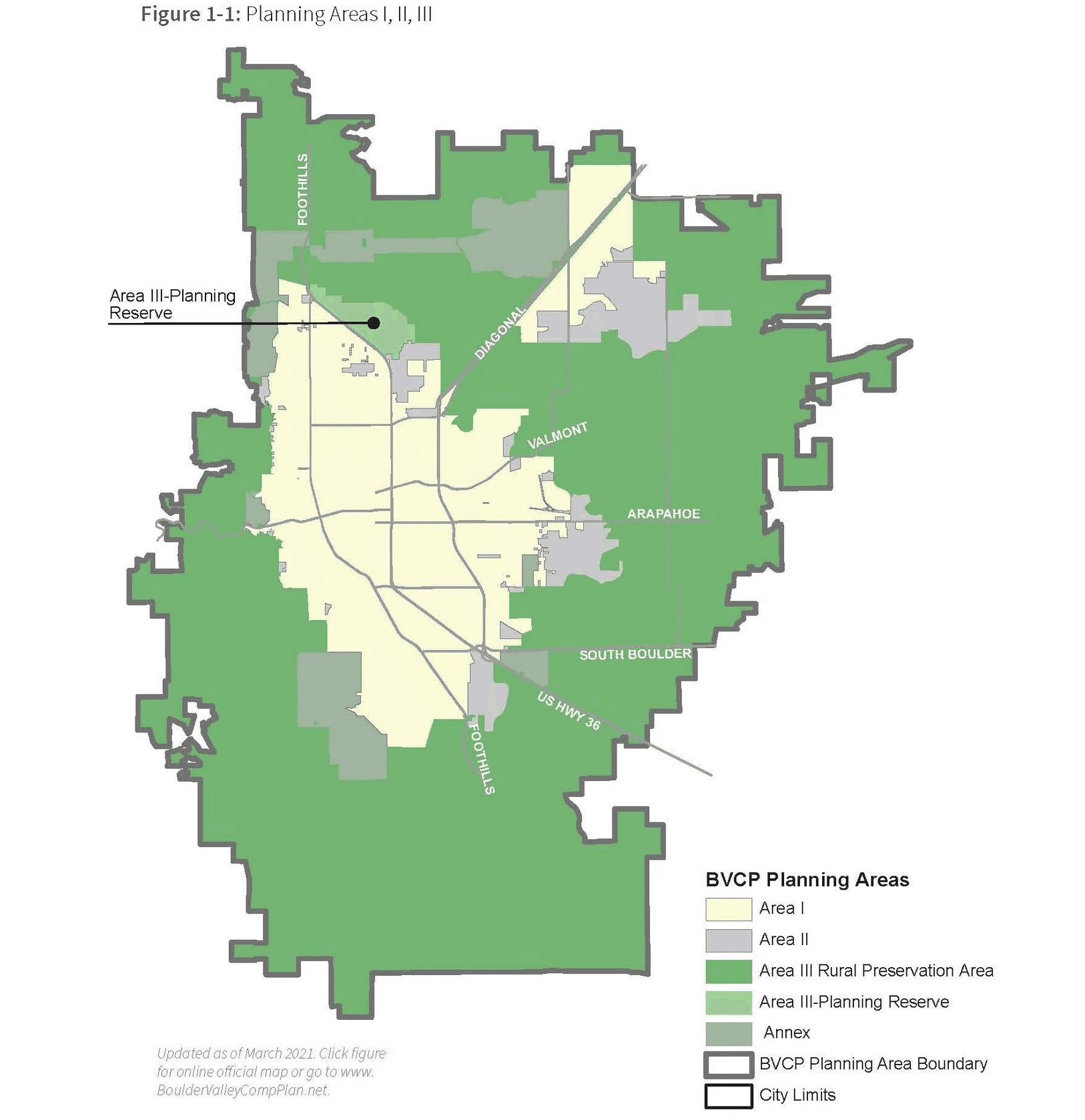
The Planning Reserve, a part of Area III, includes roughly 493 acres of land primarily north of the city near US-36. Much of this land remains in agricultural, open space, or low-density rural use, and ownership is split among private landowners, Boulder County, and City of Boulder Open Space and Parks holdings. At the meeting, staff presented updated housing need data using forecasts from the Denver Regional Council of Governments (DRCOG), the regional body that coordinates growth and transportation planning across the Denver metro area.
Staff reported that the middle-income ownership housing gap is about 19%, smaller than previously assumed, and emphasized that current city boundaries already have capacity to meet projected housing demand. DRCOG forecasts Boulder will need to accommodate about 9,500 additional housing units by 2032, and staff analysis indicates this need can largely be met without expanding into Area III.
Prior to Council’s vote, the Planning Board voted 4–3 on February 5 to recommend pausing expansion study, with ml Robles, Jorge Boone, Laura Kaplan, and Kurt Nordback voting to delay moving forward. Board members recommended evaluating whether recent zoning and housing policy changes inside the city can meet community needs before pursuing expansion. Both Planning Board members and Boulder County similarly emphasized focusing first on existing planning and development efforts before expanding outward.
Council members voting yes generally stated:
- Boulder has fallen behind on housing production and should not delay exploring options.
- The study keeps long-term flexibility open and does not commit the city to expansion.
- Expansion takes many years, so beginning analysis now helps development in the future.
- Studying expansion now does not prevent other work from continuing.
Council members voting no generally stated:
- Staff already demonstrated projected needs can be met inside the existing service area.
- The city is already managing major planning and infrastructure commitments.
- Planning Board and county recommended pausing.
- Studying expansion now risks diverting staff time and money from urgent in-city priorities.
Environmental and water supply impacts remain uncertain, with concerns raised that expanding service areas could increase long-term water demand, infrastructure footprint, and environmental pressures at a time when Boulder is already grappling with climate resilience and sustainability challenges.
What it Means
By voting yes, Council directs staff to continue planning steps that include feasibility and planning work estimated to cost up to $500,000, before any expansion decision occurs. That funding will go toward studies, not housing construction or infrastructure delivery.
Important to note, because Planning voted 4-3 against, now that Council approved, this item will have to go back to Planning to review again. If Planning maintains the majority against, the Service Area Expansion Plan will be paused.
This decision from Council comes while Boulder faces major financial and infrastructure commitments, including recreation center investments, Alpine-Balsam redevelopment, transportation funding, deferred maintenance across departments, and other long-term obligations that will shape the city’s finances and services for decades.
Rather than adding another major planning track now, many residents question whether Boulder should first resolve these large, existing commitments and see current housing and land-use changes take effect before opening the door to expansion discussions. The concern is about ensuring the city’s biggest current challenges are addressed successfully before taking on new ones.
Jenny’s Take
While the vote to continue studying expansion does not commit Boulder to growth, the decision to move forward now, before establishing clear guardrails on affordability or guarantees that any expansion would actually deliver the housing outcomes we say we want is concerning.
Staff’s own data shows the middle-income ownership gap is smaller than previously assumed, and planning staff confirmed that the city’s existing area already has capacity to meet the forecasted need without immediate expansion. Planning Board members and county partners also urged a pause, recommending we first assess whether recent zoning and policy changes inside current boundaries can produce the housing outcomes Boulder needs. Yet Council voted to proceed anyway.
At the same time, Boulder currently has roughly 600 homes for sale and about 2,000 rental units available, with around 1,300 rentals listed under $3,000 per month, the price range most often associated with “missing middle” households earning roughly $60,000–$120,000 annually. Council’s direction includes no requirement that future work deliver concrete affordability outcomes, types of housing the missing middle is looking for, or guardrails ensuring taxpayers see results rather than just more studies. There is no guarantee that spending roughly half a million dollars on feasibility work will produce housing affordable to working families, or that this effort won’t delay addressing more urgent priorities inside the city where people already live and work.
In a fiscally constrained environment, with major investments needed and underway, in my opinion, it would have been more prudent to pause and link further planning to specific affordability outcomes rather than open-ended studies. On this question, I agree with the Planning Board, the County, and Council members Adams and Wallach that now was not the right moment to continue down a path with limited guardrails and uncertain benefit.