Boulder City Council August 20th Regular Meeting


Hello Friends,
Before we get into this week's meeting, I want to start with something a little more personal.
Over the past several weeks, many people have reached out and encouraged me to run for City Council. I am incredibly grateful for that encouragement and for the confidence people continue to place in me.
After a lot of thought, I have decided not to run for City Council this year. This was not an easy decision, and it is certainly not because I am stepping away from Boulder or from the issues I care about. Quite the opposite.
I believe public service requires more than simply having enough votes to win an election. To be effective, you need a broad coalition and an environment where people with different perspectives can disagree without treating one another as enemies. I have meaningful support across this community, particularly among residents and business owners who want a pragmatic, balanced approach to city government. But I don't believe that coalition is broad enough right now to make this the right moment for me to run.
I also believe our local political environment needs to change. Too often, disagreement in Boulder becomes personal. Candidates and community members who challenge the prevailing narrative can find themselves attacked publicly and quietly simply for offering a different point of view. That is not healthy for our city, and it discourages good people from participating in public life. This is my lived experience over the last 4 years, and I want to be part of changing that culture and continuing to be a positive voice in our community.
For now, I believe I can have a greater impact by continuing to ask questions, bringing people together, advocating for good governance, and supporting our local businesses and community without having my voice filtered through the lens of a campaign. I am not closing the door on running again. I am simply saying that this is not the right time.
And, of course, I will continue doing what I have been doing here: following Council, explaining what happened, tracking the votes, and trying to make city government accountable and a little easier to understand. I will also be sending out an educational voters guide on ballot measures and candidates in October, more to come!
So, with that said...
This week's meeting had three issues worth taking a closer look at: the sale of a city-owned downtown parking lot, the authorization of eminent domain for two transportation projects, and final Council approval sending a $400 million capital bond measure to Boulder voters this November. Here we go.
The Record:
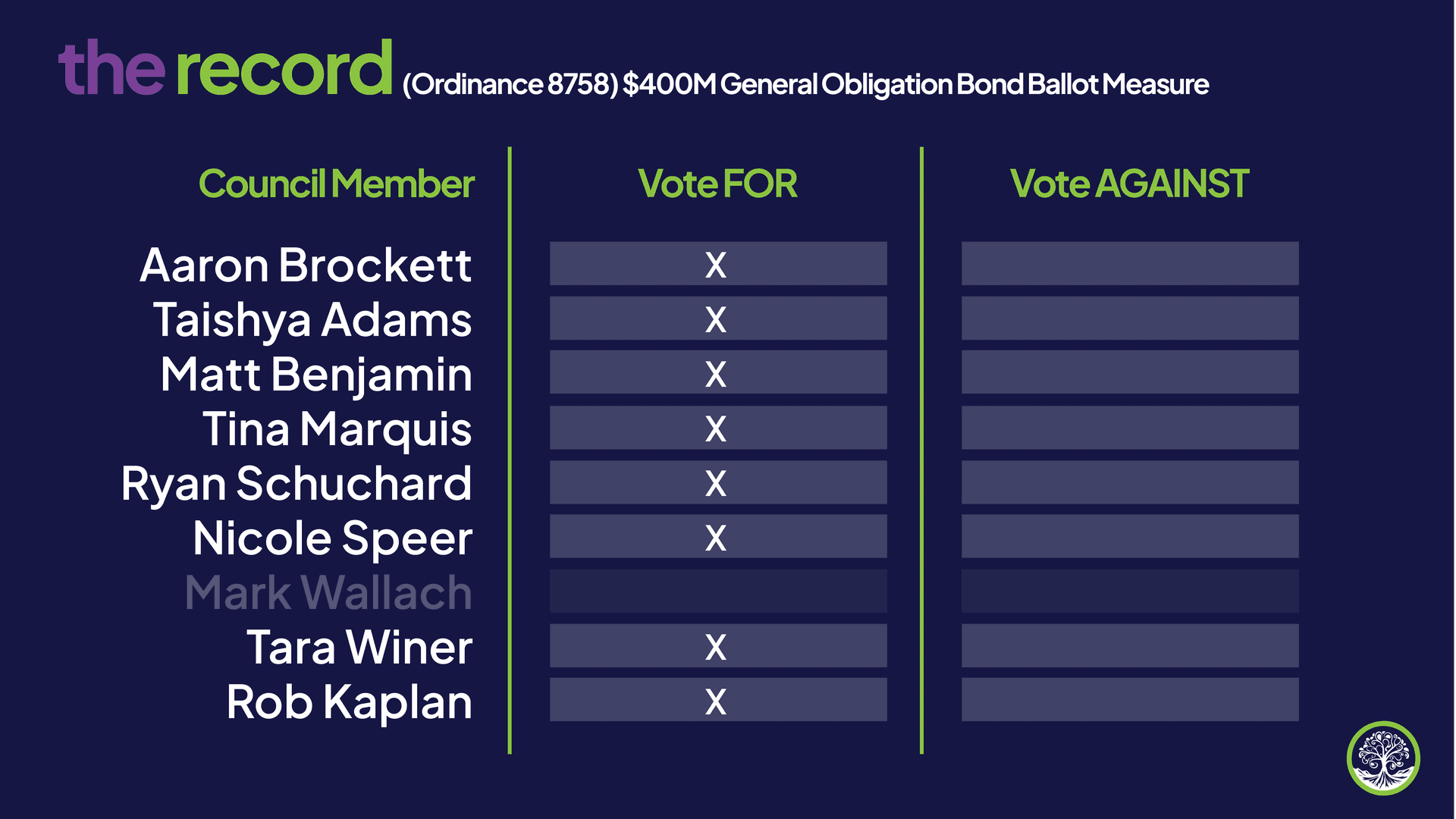
Third Reading: Ordinance 8758- Recreation & Safety General Obligation Bond
Date of vote: 8/6/2026
Outcome: Consent Agenda passed unanimously 8–0
Category: Taxes and Fees
What Happened
There was an important vote Thursday night, although you could have easily missed it because it was on the consent agenda.
Council gave final approval to Ordinance 8758, officially sending Boulder's Recreation & Safety Bond to voters on November 3. Council approved it 8–0.
The proposed bond authorizes the city to issue up to $400 million in debt for major capital projects and would be paid for through an increase in property taxes.
The ballot authorization allows a maximum repayment amount of $650 million, which accounts for principal and interest over the life of the bonds.
The city's current list of intended projects includes replacement of the South Boulder Recreation Center, including a lap pool; renovation of the North Boulder Recreation Center, including aquatics and relocation of the West Age Well Senior Center; repairs and renovations to fire stations; a new public safety building for police and 911; renovation of the Penfield Tate II Municipal Building; and renovations to portions of the Municipal Service Center, which supports services including snow removal, street operations and utility maintenance.
And there is one small but important change from the earlier version of this measure. At the August 6 meeting, Council amended the ballot language for South Boulder Recreation Center from the broader term "aquatic amenities" to specifically say "a lap pool." That language remained in the final ordinance.
Why It Matters
This is a very large financial decision.
Boulder unquestionably has aging facilities and significant deferred and upcoming capital needs. The city's argument is that issuing bonds allows those needs to be addressed without substantially reducing existing services or abandoning other planned capital projects. But voters should understand exactly what is being proposed.
The city would be authorized to borrow $400 million, and taxpayers would repay that debt through increased property taxes. The ballot allows total repayment of up to $650 million, including interest.
Council's 8–0 vote Thursday did not actually authorize Boulder to borrow the money. It authorized you to make that decision. Boulder voters will have the final say in November.
Jenny's Take
This one is complicated for me. I have spent years advocating for our recreation centers, particularly South Boulder. The condition of several city facilities is not something Boulder can simply ignore forever, and I am thrilled to see a lap pool specifically included for South Boulder.
But $400 million is a huge ask. The city itself acknowledges that it currently faces approximately $400 million in unfunded infrastructure and major maintenance needs, and that existing revenues cannot address that backlog.
That is why I appreciated Mayor Pro Tem Tara Winer raising concerns about transparency and the size of what we are asking voters to approve. I think those questions are not only fair, but necessary.
When government asks residents to authorize $400 million in new debt, with as much as $650 million ultimately authorized for repayment, Council should be asking whether voters have been given a clear enough picture of how we got here, how projects were prioritized, what the actual costs will be, and how the city intends to prevent another massive maintenance backlog in the future.
I disagree with Nicole Speer's response suggesting that the city has already provided sufficient transparency around these issues. There is an important difference between providing information and earning public confidence that government is transparent.
Yes, the city has conducted engagement. The packet points to polling, eight community engagement sessions and an online exercise. But simply holding meetings, publishing documents and collecting public input doesn't automatically mean the community feels informed or that residents believe the decision-making process is transparent.
In fact, we have repeatedly heard concerns from residents about transparency and process, whether it is the airport, the tip credit, major land-use decisions, or now a $400 million bond measure. We shouldn't dismiss that simply because the city can point to the number of meetings it has held.
Transparency is not something government gets to declare about itself. Public trust is ultimately the measure of whether transparency is working. And that is precisely why I continue to advocate for an independent City Auditor's Office.
This isn't about assuming city staff are doing something wrong. It is about providing Council and the public with independent verification that major programs, capital projects and public dollars are being managed efficiently and achieving what they were intended to achieve. The city's own materials say this bond is necessary because existing revenues cannot solve the current $400 million facilities backlog. If we are asking taxpayers to solve that problem with hundreds of millions of dollars in new debt, I think it is entirely reasonable for Council members like Tara, and for the community, to ask for a higher level of financial transparency and independent accountability.
I support investing in our critical infrastructure. But supporting the projects and demanding greater accountability for how we pay for and manage them are not mutually exclusive. In fact, with an investment this large, I think they should go hand in hand.
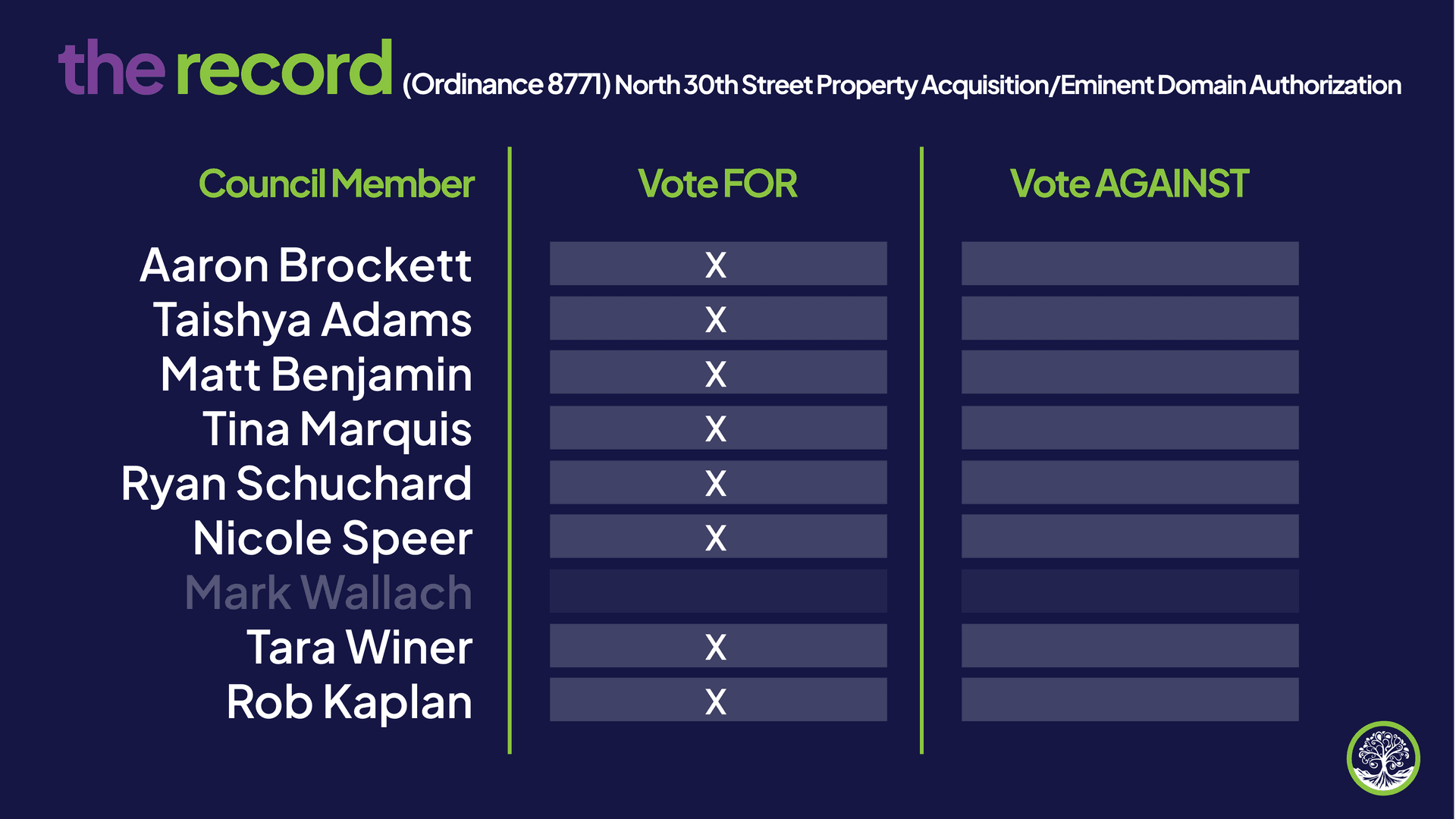
Public Hearing: Ordinance 8771- North 30th Street Property Acquisition/Eminent Domain Authorization
Date of vote: 8/20/2026
Outcome: Passed unanimously
Classification: Procedural
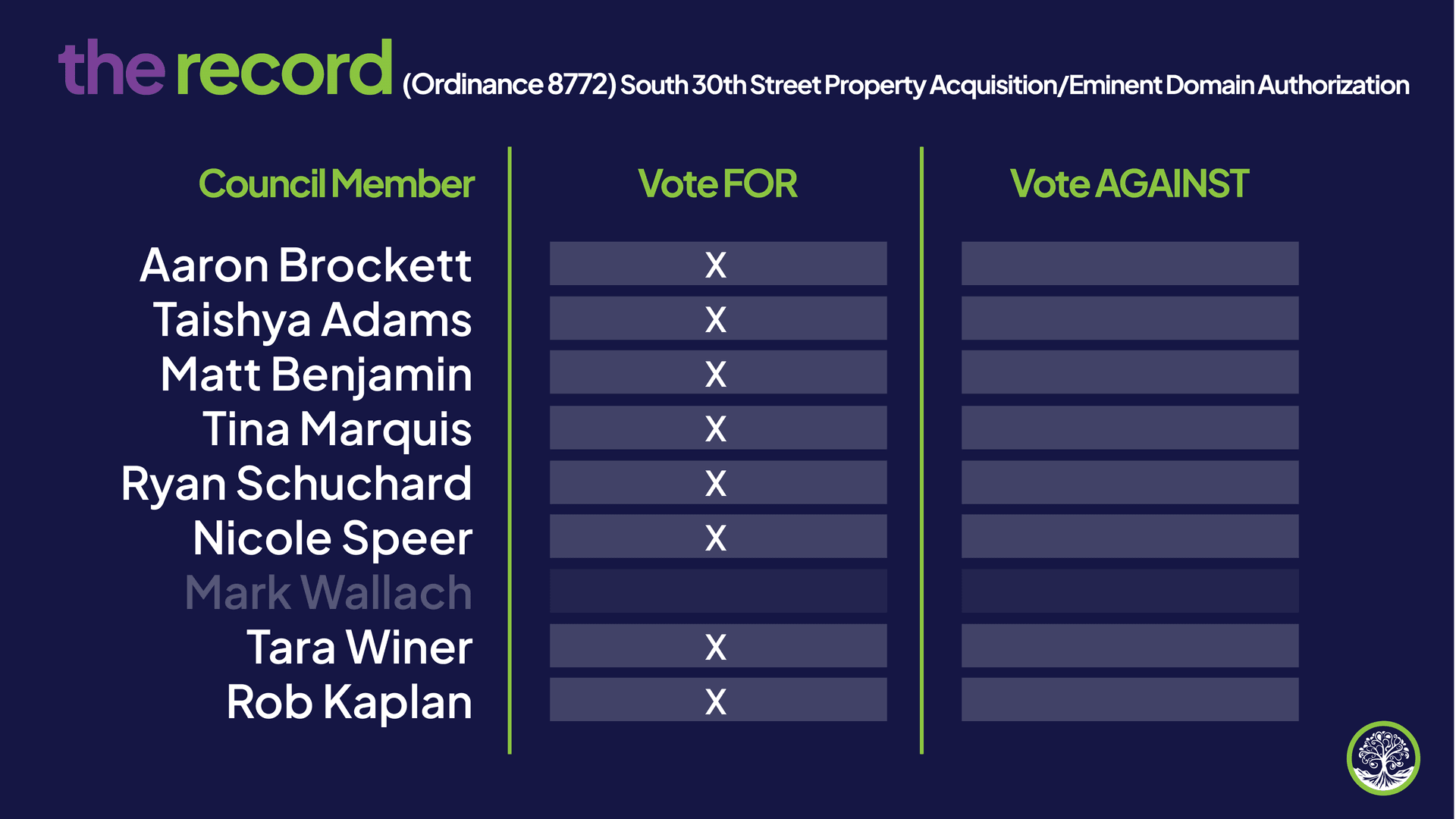
Public Hearing: Ordinance 8772- South 30th Street Property Acquisition/Eminent Domain Authorization
Date of vote: 8/20/2026
Outcome: Passed unanimously
Classification: Procedural
What Happened:
Council also held two separate public hearings authorizing the city to acquire property interests needed for improvements along North and South 30th Street.
Both passed unanimously.
North 30th Street
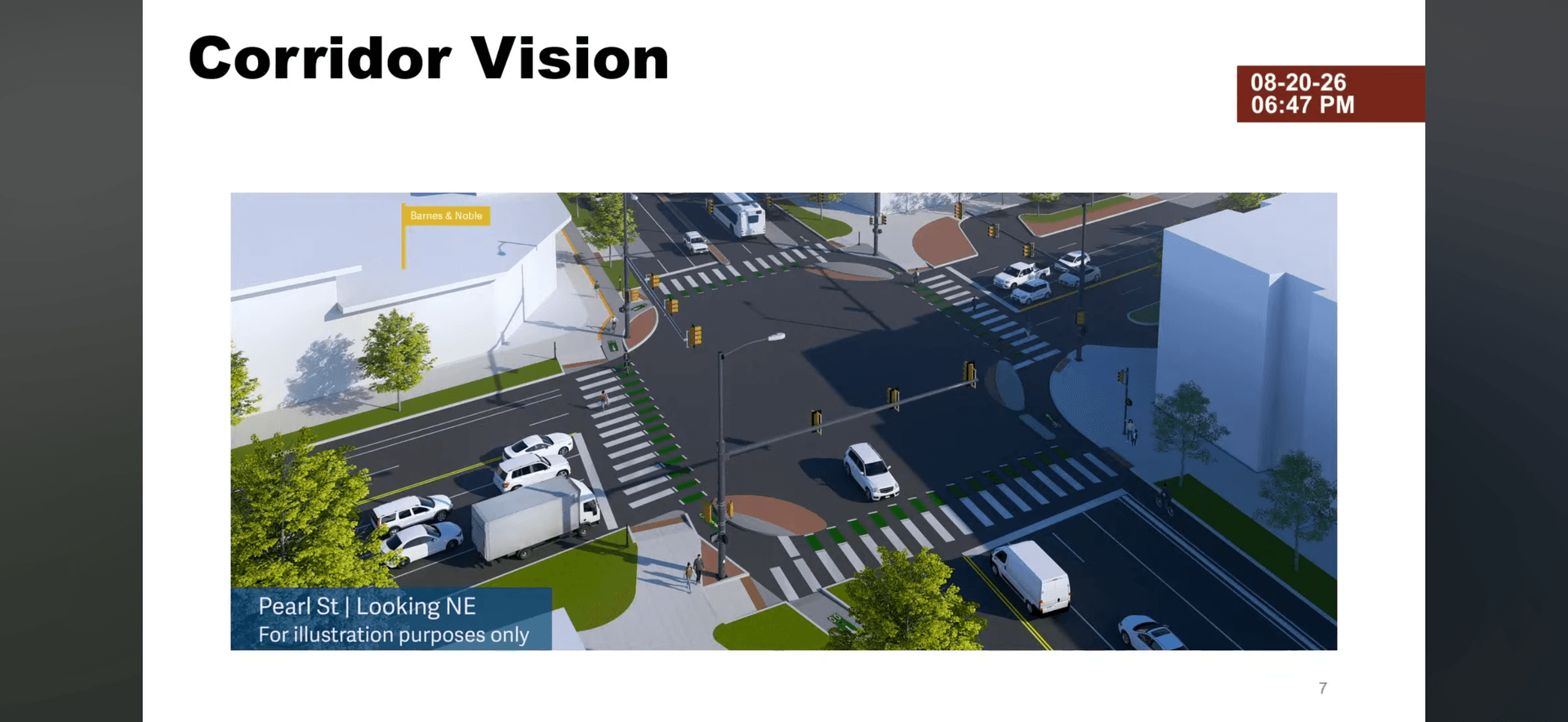
The North 30th Street project runs from Walnut Street to the Diagonal Highway. The planned improvements include protected intersections, traffic-signal changes, protected bike lanes, new and upgraded pedestrian crossings, floating bus stops, access changes at some side streets and driveways, and repurposing some right-turn slip lanes. The project is estimated to cost approximately $9.3 million.
The city is providing a 20% local match of $2.41 million, which is already included in the Capital Improvement Program, with the remainder largely supported through federal funding. The federal funding must be spent by December 2030.
South 30th Street
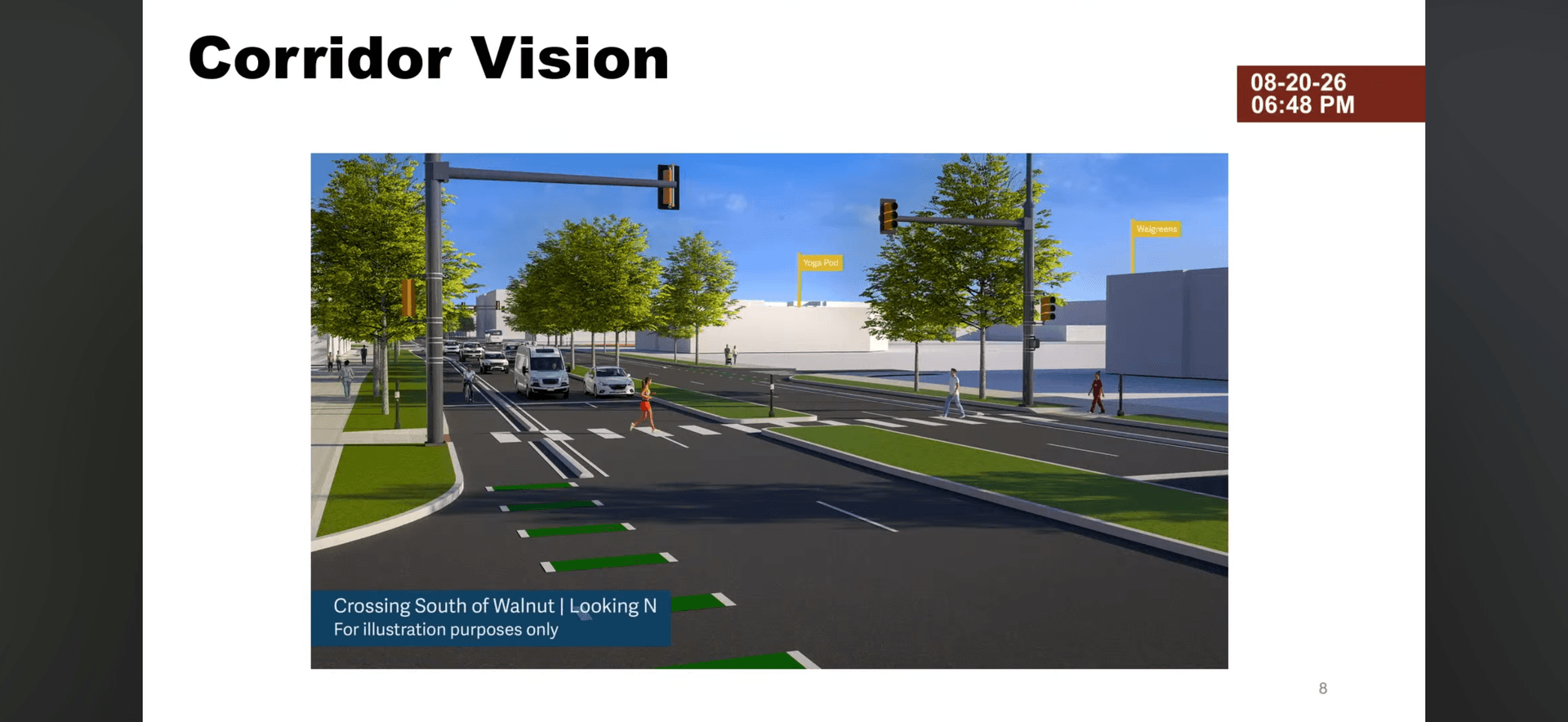
The South 30th Street project ultimately runs from Colorado Avenue to Baseline Road, although the currently funded phase focuses on the section between Colorado and Aurora avenues. Additional improvements between Aurora and Baseline will occur when additional funding becomes available.
The South 30th project is approximately $3.67 million, with approximately $3 million federally funded.
Why It Matters
Whenever we hear the words eminent domain, it deserves attention. In both cases, the city needs portions of private property or easements because the existing right-of-way isn't sufficient to build all the planned improvements.
The ordinances explicitly authorize eminent domain. But there is an important distinction. The areas that we are talking about are silvers of land within and around existing easements. The city is required to first negotiate in good faith with affected property owners and make compensation offers. Eminent domain can be used if voluntary negotiations are unsuccessful.
Government taking private property, even a relatively small portion of it, should never be treated casually. But Council did not vote Thursday night to immediately seize these properties.
It authorized staff to negotiate for the property interests needed to complete already-planned transportation projects and gave the city the ability to use condemnation if those negotiations ultimately fail.
For North 30th, there is also a practical financial consideration: Boulder is operating under a deadline to use the federal funding by December 2030. Delays in obtaining the necessary property could jeopardize that funding.
Jenny's Take
I think these were reasonable votes. Property rights matter, and eminent domain should always be a last resort.
But there is a significant difference between authorizing eminent domain as a backstop and immediately exercising it. The city's first step remains negotiation with affected property owners.
And when Boulder can leverage millions of dollars in federal funding for infrastructure projects rather than placing the entire burden on local taxpayers, that should factor into the decision as well.
Public Hearing: Sale of City-Owned Property at 2121 Broadway
Date of vote: 8/20/2026
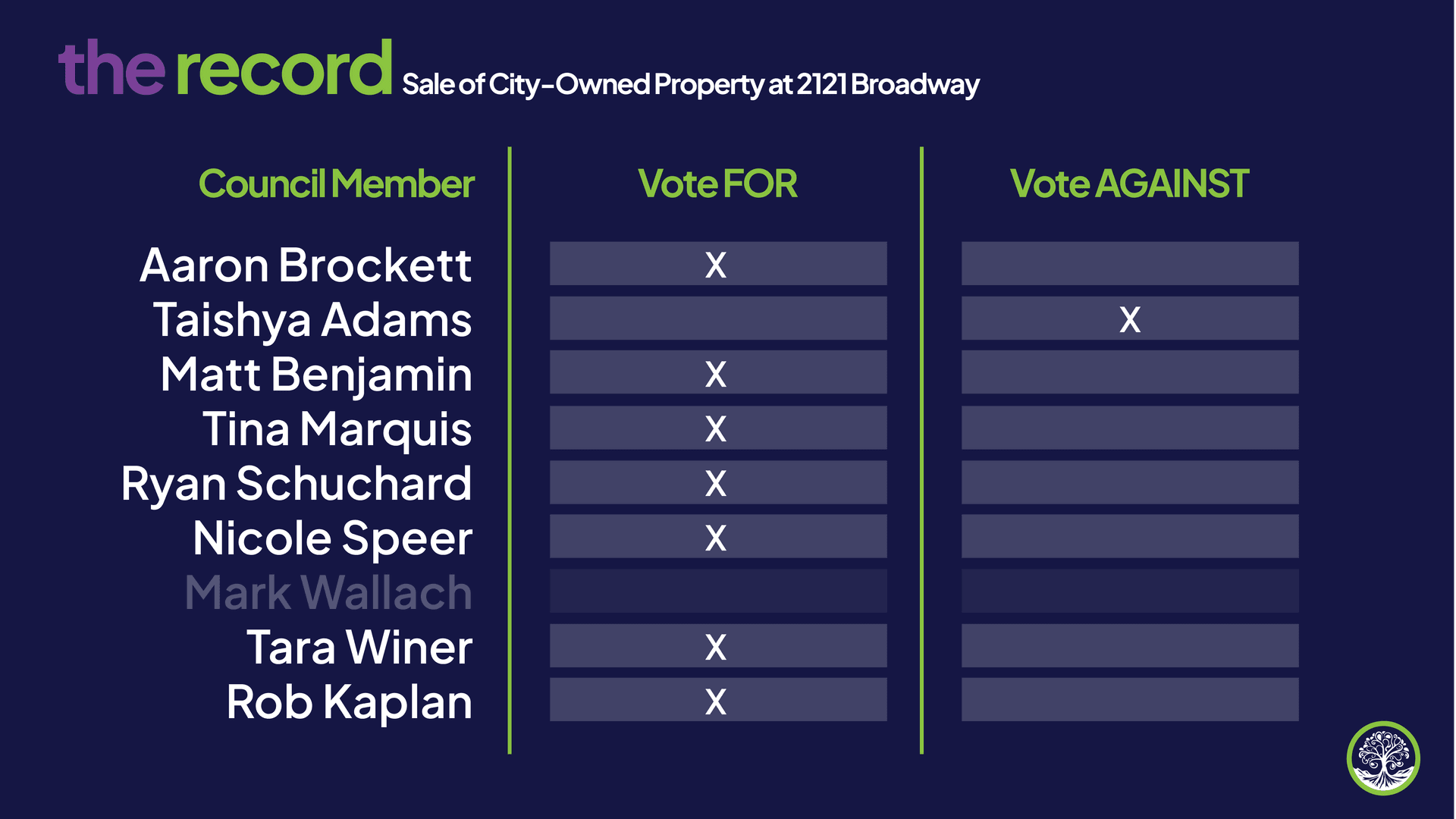
Outcome: Passed 7–1
Classification: Density
What Happened:
This was the big public hearing of the evening. Council temporarily adjourned as City Council and reconvened as the board of the downtown commercial district to consider selling the city-owned surface parking lot at 2121 Broadway, near Broadway and Spruce.
The board ultimately voted 7–1 to approve the sale for $5.8 million to MA-LR Boulder, LLC, which intends to redevelop the property.
Importantly, this vote did not approve the proposed development. It approved the purchase and sale agreement. The development itself will still need to go through the city's development review process, with the packet anticipating that process occurring in 2027 and 2028.
The sale was controversial. Nearby churches and nonprofits argued that the parking lot serves an important function for their congregations, visitors, employees and programs, particularly for seniors and people who need accessible parking. More than 1,300 signatures were submitted opposing the sale. Public comment was overwhelmingly against the development.
The agreement includes a number of negotiated community benefits, including affordable commercial space, public art funding and sustainability requirements. The agreement also includes a 30-year covenant protecting alley access for First Congregational Church.
The Downtown Management Commission had previously recommended approval of the sale 5–0.
Why It Matters
This debate really comes down to what Boulder wants its downtown to look like in the future. A surface parking lot in one of the most valuable parts of downtown. Redevelopment can mean more visitors, more economic activity, additional tax revenue and more people spending money downtown.
But parking is also not an imaginary concern simply because Boulder wants people to walk, bike or take transit. The churches and nonprofits surrounding this property are existing downtown institutions, and many of the people they serve, particularly older residents and people with mobility limitations, rely on nearby parking. Those concerns deserve to follow this project into development review.
Jenny's Take
I absolutely agree that downtown Boulder needs revitalization. We need more people downtown, stronger businesses, active storefronts, great restaurants, arts and entertainment, and reasons for residents and visitors to spend time there.
But I disagree with the idea that revitalization always must mean more density on every available piece of land.
This parking lot serves a purpose. More than 1,300 people signed a petition opposing its sale, and several nearby churches and nonprofits explained that their members and visitors rely on this parking, particularly seniors and people with mobility challenges. I don't think those concerns should be dismissed as simply resistance to change.
What I found particularly frustrating was how little weight that level of community opposition seemed to carry. We have just spent months watching Council wrestle with the airport, where petitions, community signatures and demands for additional public process became a major part of the conversation. Yet here, more than 1,300 people signed their names asking Council not to sell a public asset, and the majority of Council chose to ignore this fact and moved forward anyway.
These are obviously different issues, but the principle shouldn't be: community input matters when it supports the outcome we prefer and matters less when it doesn't. If signatures and organized community opposition are evidence that Council should slow down and listen on one issue, they deserve meaningful consideration on another. Consistency in how we value public input is an important part of public trust.
Parking is infrastructure, too. We have spent years making it more difficult to drive and park downtown while simultaneously asking ourselves why fewer people are coming downtown. For many Boulder residents, especially those who don't live within walking or biking distance, convenient and accessible parking is part of what determines whether they come downtown at all.
And there are so many other things we can do to revitalize downtown: improve safety and cleanliness, fill vacant storefronts, make it easier for businesses to open and expand, activate public spaces, bring in events and entertainment, improve permitting, and create an environment where existing businesses can actually succeed.
Development can certainly be part of that equation. But development shouldn't automatically win simply because a parcel can accommodate more density. Once publicly owned land in the heart of downtown is sold, we don't get it back. That makes this a much bigger decision than whether a boutique hotel might be a productive use of one surface parking lot.
I would have preferred the city keep this property and take a broader look at downtown's parking, accessibility, transportation and economic-development needs before permanently giving up a public asset that so many existing downtown users say they depend on.
Revitalizing downtown should be about making it easier and more appealing for people to come downtown, not making it harder to get there.
Final Thoughts
There is an interesting thread running through all three of these decisions. On Broadway, Boulder is selling a public asset and betting that redevelopment will produce greater long-term value for downtown.
On 30th Street, Boulder is using local dollars to leverage substantially more outside funding for transportation infrastructure. And in November, Boulder will ask residents to authorize $400 million in new debt to address major capital needs.
Different issues, but they all come back to the same basic question: Are we getting the greatest long-term value for the money and assets the public has entrusted to the city? That is a question worth asking whether the answer is yes, no, or somewhere in between. And maybe that is also the connection to what I said at the beginning of this Record.
You don't have to sit on City Council to care deeply about how your city is governed. You don't have to be a candidate to ask hard questions, advocate for businesses and residents, or insist on transparency and accountability. For now, that is the role I am choosing. And I intend to keep doing it.
Thank you for reading!
Jenny
Founder, Jenny on the Record