The Record: Special Edition


While this newsletter typically focuses on tracking City Council votes and outcomes, there has been so much happening behind the scenes that I thought it warranted a special edition. While we wait for the next round of City Council votes, a lot is unfolding that will shape Boulder’s future in meaningful ways.
Over the past few weeks, Council and Planning Board have been digging into major issues, from how we fund our city long-term, to how we plan for growth under the BVCP, to whether previously protected areas should be brought into active planning.
At the same time, I had the opportunity to participate as a delegate in the county, congressional, and state assemblies, where candidates for the primary ballot were selected and broader political priorities began to take shape. While not all of these moments involved final votes, they are where direction is set, tradeoffs are debated, and the groundwork is laid for the decisions that ultimately come before voters and Council. So let’s get into it!
Fund Our Future: Long-Term Financial Strategy Council Study Session
Date of Meeting: 3/12/2026
What happened
Council reviewed a proposed Downtown Development Authority (DDA) as part of the Fund Our Future initiative. A DDA is a special district that can reinvest funding within a defined area to support infrastructure and economic vitality. One of its primary tools is Tax Increment Financing (TIF), which captures the increase in tax revenue from new development and reinvests it back into the district rather than the general fund.
Staff outlined a potential 30-year structure (extendable), combining TIF, a possible mill levy, and parking revenue to fund major investments in downtown and University Hill. Council asked for more detail on boundaries, financial guardrails, impacts to other taxing entities (like BVSD), and what specific projects would be funded. June is shaping up to be the key decision point on whether to move this toward a ballot.
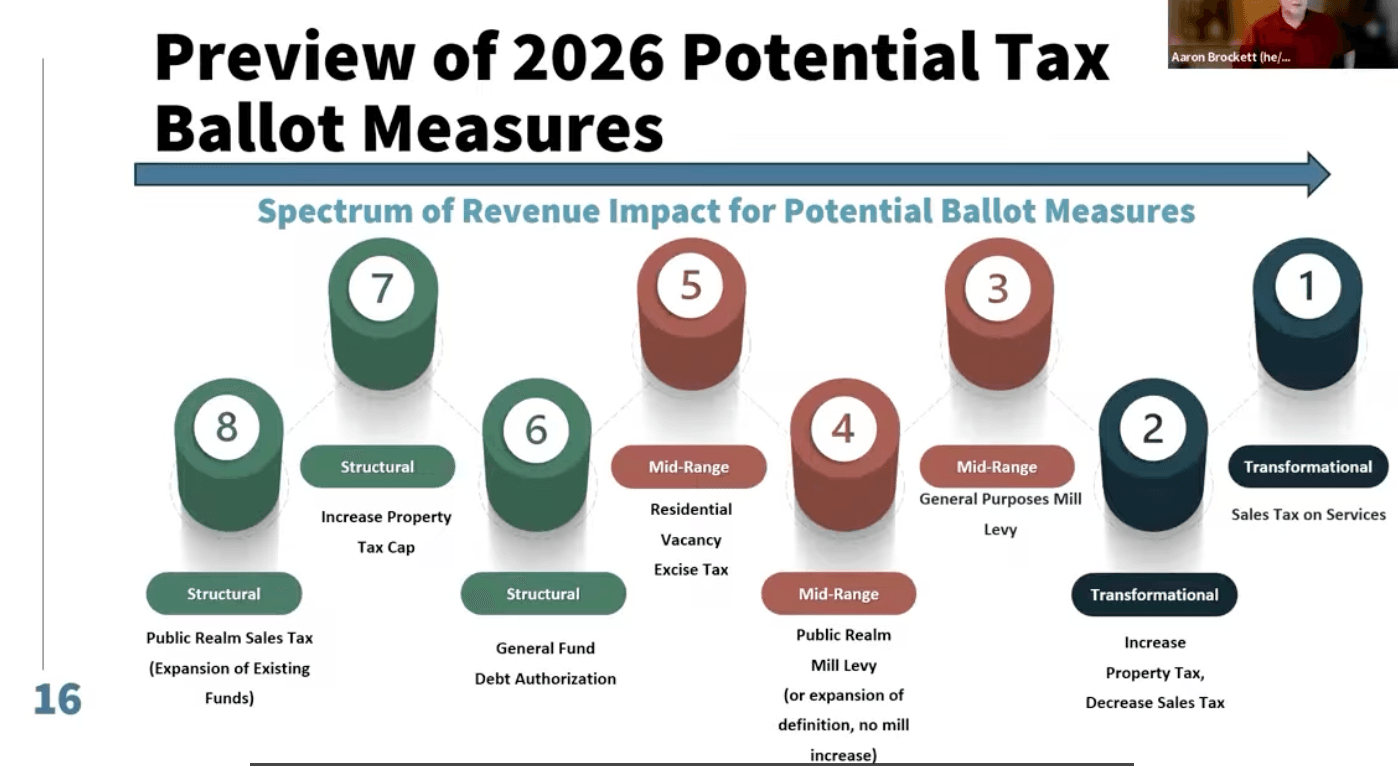
Council then shifted to a broader discussion of potential 2026 tax measures, using a straw poll to narrow what staff should explore further. Council approved 4, 5, 6, and 8 (below) for further exploration.
Why This Matters
There is clear movement toward shaping a 2026 ballot strategy. Rather than pursuing sweeping structural changes, Council is focusing on more incremental tools, specifically a vacancy tax, increased debt capacity, potential property tax adjustments, and continued reliance on fees. There was no outright rejection of new revenue options, but the discussion made clear that voter tolerance, affordability, and trust will be critical. There is also broad recognition that some of the more complex ideas simply aren’t ready for a 2026 ballot.
Potential Ballot Measures (Council Direction and What They Mean)
Sales Tax on Services: Unlikely
Expands Boulder’s sales tax beyond goods (like retail purchases) to include services (like legal, consulting, or personal services). This would significantly broaden the tax base but is a major structural shift that would require statewide alignment and extensive public buy-in.
Shift from Sales Tax to Property Tax: Unlikely
Reduces reliance on sales tax and increases reliance on property tax to fund city services. The goal is more stable revenue, but it would shift more of the burden onto homeowners and property owners.
Public Realm Mill Levy: Unlikely
A property tax increase dedicated specifically to funding public spaces, things like streetscapes, parks, civic areas, and downtown improvements. Funds would be restricted to these types of visible community investments.
Residential Vacancy Tax: Moving Forward
A tax on homes that sit vacant for extended periods, intended to encourage owners to rent or occupy them. The idea is to increase housing availability, though projected revenue is relatively small.
Increase General Fund Debt Limits: Moving Forward
Allows the city to borrow more money (issue debt) backed by existing revenues to fund large infrastructure projects now, rather than waiting to pay for them over time. This does not immediately raise taxes but creates long-term repayment obligations.
Increase Property Tax Cap (Mill Levy Increase): Moving Forward
Raises the maximum property tax rate the city is allowed to collect, generating additional ongoing revenue for general city services.
Consolidate Sales Tax Funds into a “Public Realm Fund”: Unlikely
Combines several existing, restricted sales tax revenues into a single, more flexible fund. This would allow the city to shift money between priorities more easily but reduces strict voter-directed spending protections.
Expanded Use of Fees : Moving Forward
Increases or adds fees (like transportation or development impact fees) that are charged directly rather than approved by voters. These are often tied to specific services but can function similarly to taxes in practice.
Jenny’s take
These decisions will shape what you may be asked to vote on in 2026. My view: these tools could unlock needed investment, but we need to be extremely cautious. Debt creates long-term obligations, and expanding taxes or fees without clear accountability will be a tough sell. Any ballot measure should come with strong safeguards, clear outcomes, and real evidence that the community supports it.
BVCP Joint Study Session (Council + Planning Board)
Date of Meeting: 3/26/2026
What happened
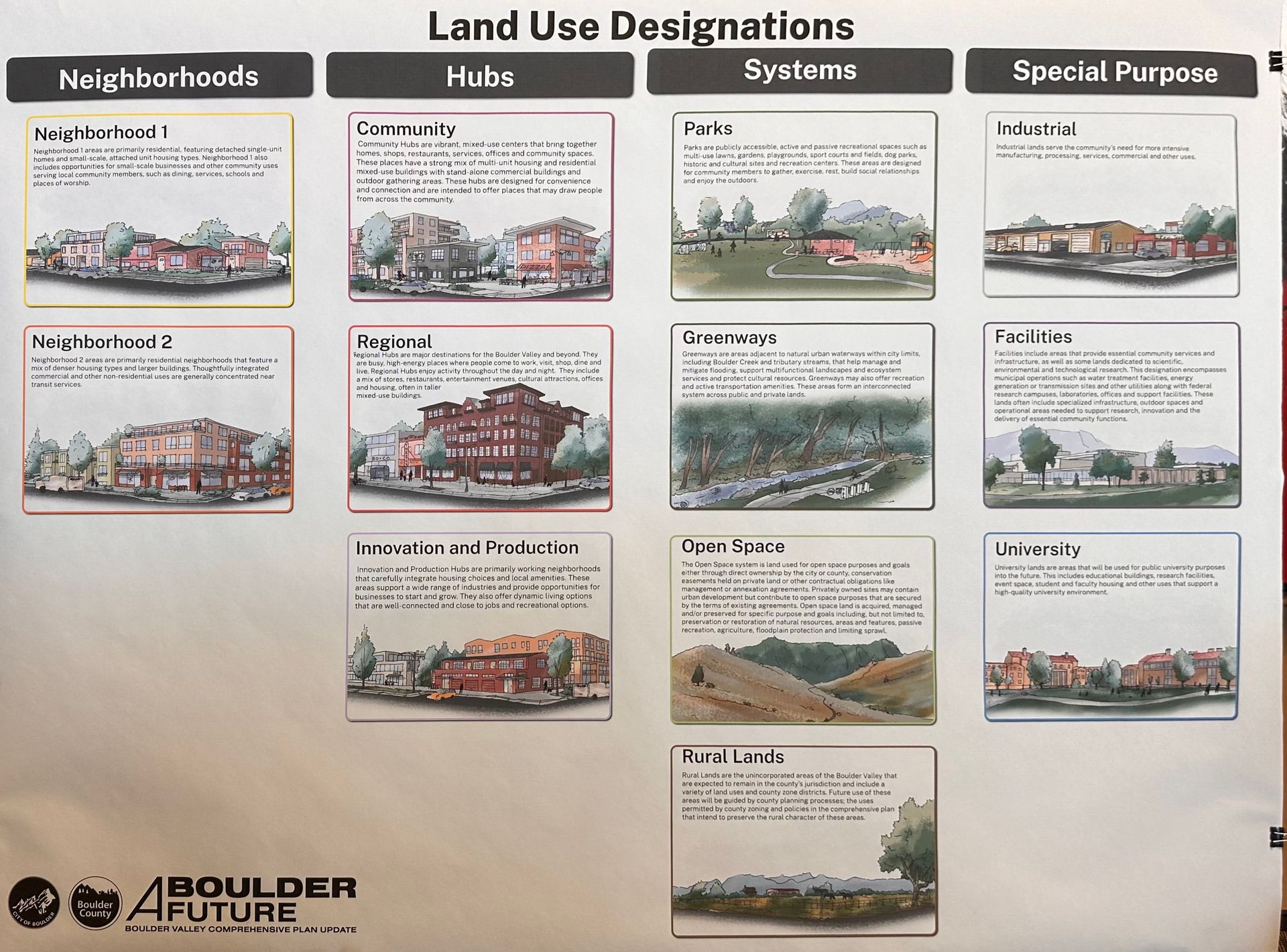
Council and Planning Board reviewed the draft Boulder Valley Comprehensive Plan (BVCP) alongside an update from BVSD: enrollment has dropped by 3,600 students since 2017, with further declines projected.
According to Staff, the BVCP draft proposes:
- A simplified land use framework
- 15-minute neighborhoods
- 35% increase in housing capacity
- 11% increase in job capacity
- Public comment closes April 6, with adoption expected in June.
Why This Matters
The core tension remains: More housing and flexibility vs. preserving neighborhood character and capacity.
There was also growing recognition that Boulder cannot fully avoid growth pressures and current policies may not be delivering intended outcomes.
Jenny’s take
I understand that this plan is meant to be aspirational. But I think we also need to ground it more clearly in the reality of where Boulder is today. In many parts of the city, we already function as 15-minute neighborhoods, and we currently have a significant amount of vacant retail and underutilized space. At the same time, we are working within very real constraints, particularly around water, infrastructure, and environmental limits that need to be more directly acknowledged in the plan.
I also think it’s important to recognize who tends to show up in these processes. The people advocating for change are often the most engaged and influential in shaping direction, while those who may prefer to work within our existing structure are less likely to participate or feel heard. That dynamic matters, and it can skew outcomes in ways that don’t fully reflect the broader community.
On BVSD, I don’t believe enrollment declines are purely demographic. We lost families to private schools during COVID when schools closed, and many didn’t return. That has real impacts on both enrollment and funding, and it should be part of this conversation.
Overall, I think this plan contains many good ideas, but without a clearer implementation roadmap, stronger alignment with our existing assets, and more explicit consideration of constraints, it risks being only visionary and not actionable.
Planning Board Meeting: Area III Planning Reserve
Date of Meeting: 3/24/2026
What happened
Planning Board originally voted 4–3 against moving forward with planning work in the Area III Planning Reserve by pausing the initiative for a few years. City Council then weighed in and voted 7–2 in favor, which sent the item back to Planning Board for reconsideration. On the second review, the Planning Board created Laura Kaplan changed her vote, flipping the outcome and resulting in approval to move forward with additional planning work. This means the city will now begin spending time and resources to further study and explore these areas.
The shift appears to have been driven less by new data and more by a change in framing. Planning Board discussed a drafted statement that included specific, though ultimately unenforceable, guardrails around middle-income housing and affordability, which may have provided enough comfort for a vote change. Combined with strong Council direction, in my opinion, the vote change reads more as a policy shift than a data-driven one.
Why This Matters
This is a meaningful vote change, not just in outcome, but in process. While the argument that delaying planning doesn’t eliminate future growth pressure has merit, the reversal raises important questions about consistency and decision-making. The city has already commissioned studies indicating that Boulder can meet its near-term housing needs through infill within the existing footprint. Moving forward with additional planning in the reserve despite that analysis creates a disconnect between the data we’re collecting and the decisions being made.
This does not mean development is imminent, but it does open the door and signals a shift toward exploring growth beyond current boundaries.
Jenny’s take
What concerns me most is the inconsistency between the data and the decisions we’re making. Why are we now choosing to move forward with additional planning in the reserve given the information in the studies? At some point, we have to either trust analysis or stop asking for it.
I understand the argument about planning ahead, but this feels less like proactive planning and more like shifting direction without a clear justification. This decision didn’t come from new data or a changed condition, it came from a vote flip.
Meanwhile, Boulder is facing very real, immediate challenges: financial constraints, aging infrastructure, declining school enrollment, and maintaining the assets we already have. Choosing to spend public resources exploring expansion, despite prior analysis suggesting it’s not needed yet, raises real questions about priorities.
We should be focused on getting our existing system right before expanding beyond it.
Caucus & Assembly: Who’s on the Ballot
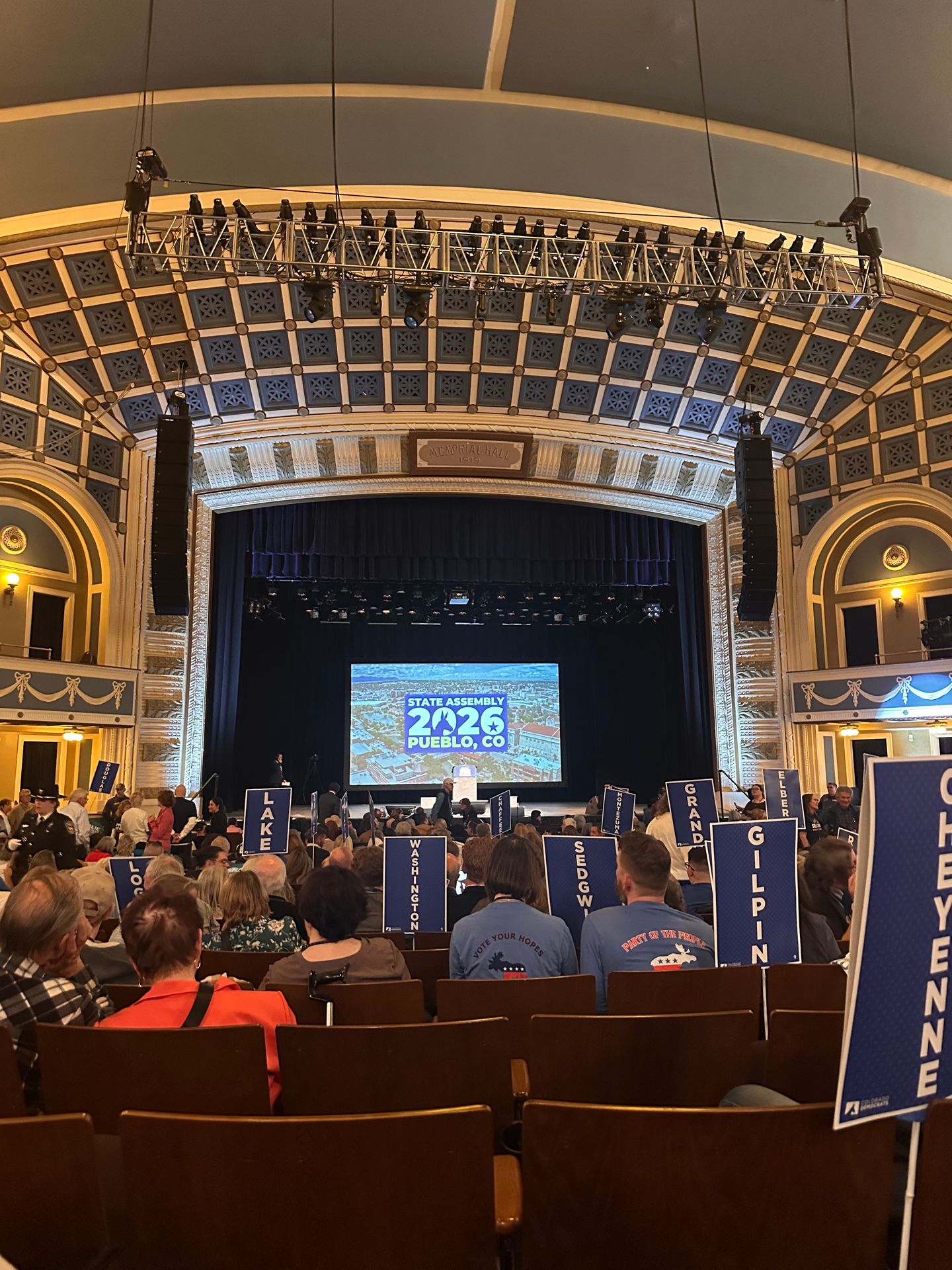
I had the honor of being elected as a delegate to both the Boulder County Assembly and the Democratic State Assembly in Pueblo. It was an energizing experience to be part of the process firsthand.
As a quick explanation of how candidates get on the ballot in Colorado, there are three primary paths:
Caucus & Assembly Only: Candidates participate in precinct caucuses and advance to county and state assemblies, where delegates vote. Those who receive 30% or more of the delegate vote automatically secure a spot on the primary ballot.
Caucus & Assembly + Petition: Candidates who receive at least 10% at assembly can still qualify for the ballot by collecting the required number of petition signatures.
Petition Only: Candidates can bypass the assembly process entirely and gather enough voter signatures to qualify directly for the ballot.
Many candidates pursue both the assembly and petition routes to ensure access. While the assembly helps determine ballot order and signals early party support, the final decision ultimately rests with voters in the primary.
Statewide Race Results for June Primary Ballot
Governor: Phil Weiser (90.2%) vs. Michael Bennet (petition)
U.S. Senate: Julie Gonzales (74%+) vs. John Hickenlooper (petition)
Attorney General:
Jena Griswold (41.8%)
David Seligman (40.6%)
Michael Dougherty (17.6%, petition)
Hetal Doshi (petition)
Secretary of State:
Amanda Gonzalez (63.1%) vs. Jessie Danielson
Treasurer:
Jeff Bridges (43.7%)
Brianna Titone (29%, just missed/did not petition)
John Mikos (27%, just missed/did not petition)
Federal & Regent
CD2: Joe Neguse
CU Regent:
Kubs Lalchandani (39%)
Edie Hooton (37%)
Chris Larsen (22% did not petition)
Murray Smith (may qualify via petition)
Boulder County
Treasurer (only contested race):
Jen Kaaoush (48.1%)
Rachel Friend (41.8%)
Bill Van Dusen (10%, may petition)
Uncontested County Offices:
County Commissioner District 3: Ashley Stolzmann
Clerk & Recorder: Molly Fitzpatrick
Assessor: Cynthia Braddock
Coroner: Jeff Martin
Surveyor: Kayce Keane
Sheriff: Curtis Johnson
State Legislature (Uncontested Seats)
Colorado House:
HD10: Junie Joseph
HD12: Kyle Brown
HD49: Lesley Smith
Colorado Senate:
SD15: Janice Marchman
SD17: Katie Wallace
Why This Matters
The outcomes ultimately go to voters, but being there made it clear how much groundwork is laid at this stage. The energy, the debates, and the alignment happening now will shape the races and the policy direction. We’ll be watching in the months ahead.
Bottom Line
All of the above sets real direction across the board. From how we fund the city, to how we plan for growth under the BVCP, to decisions about whether to expand beyond our existing footprint, the groundwork is actively being laid. At the same time, the candidates who will shape state and local policy are now set for the primary ballot. These moments define what choices are ultimately put in front of voters and how Boulder evolves from here.
Thank you for reading!
Jenny
Founder, Jenny on the Record