
Tip Credit and Sundance Short Term Rentals


Tip Credit: A Debate About Relief
Council spent significant time discussing Boulder’s authority to modify the tip credit (tip offset). Here is some background and overall context:
In 2019, Colorado passed Colorado House Bill 19-1210, which gave cities broad authority to set their own local minimum wage. Because the tip credit is part of how minimum wage is structured, this effectively gave cities the ability to modify it as well.
In 2025, the state revisited this issue through Colorado House Bill 25-1008, reflecting growing concern about how different cities were approaching tipped wages. This bill was part of an ongoing effort to clarify. The bill allows jurisdictions with a higher minimum wage than the state’s minimum wage to increase their allowed tip offset, as long as the resulting base wage for tipped employees does not fall below the state’s base wage, which currently is $12.14.
Boulder has already approved significant wage increases. The city’s minimum wage is set to rise approximately 24% in total, increasing 8% annually from 2025 through 2027, and then continuing to adjust with CPI. This means the tip credit conversation is happening on top of already locked-in cost increases for local businesses.
Currently, Boulder’s tip credit is $3.02 and does not increase over time. As the minimum wage rises, the tip credit becomes a smaller share of total wages, meaning businesses receive less relative relief each year if no changes are made.
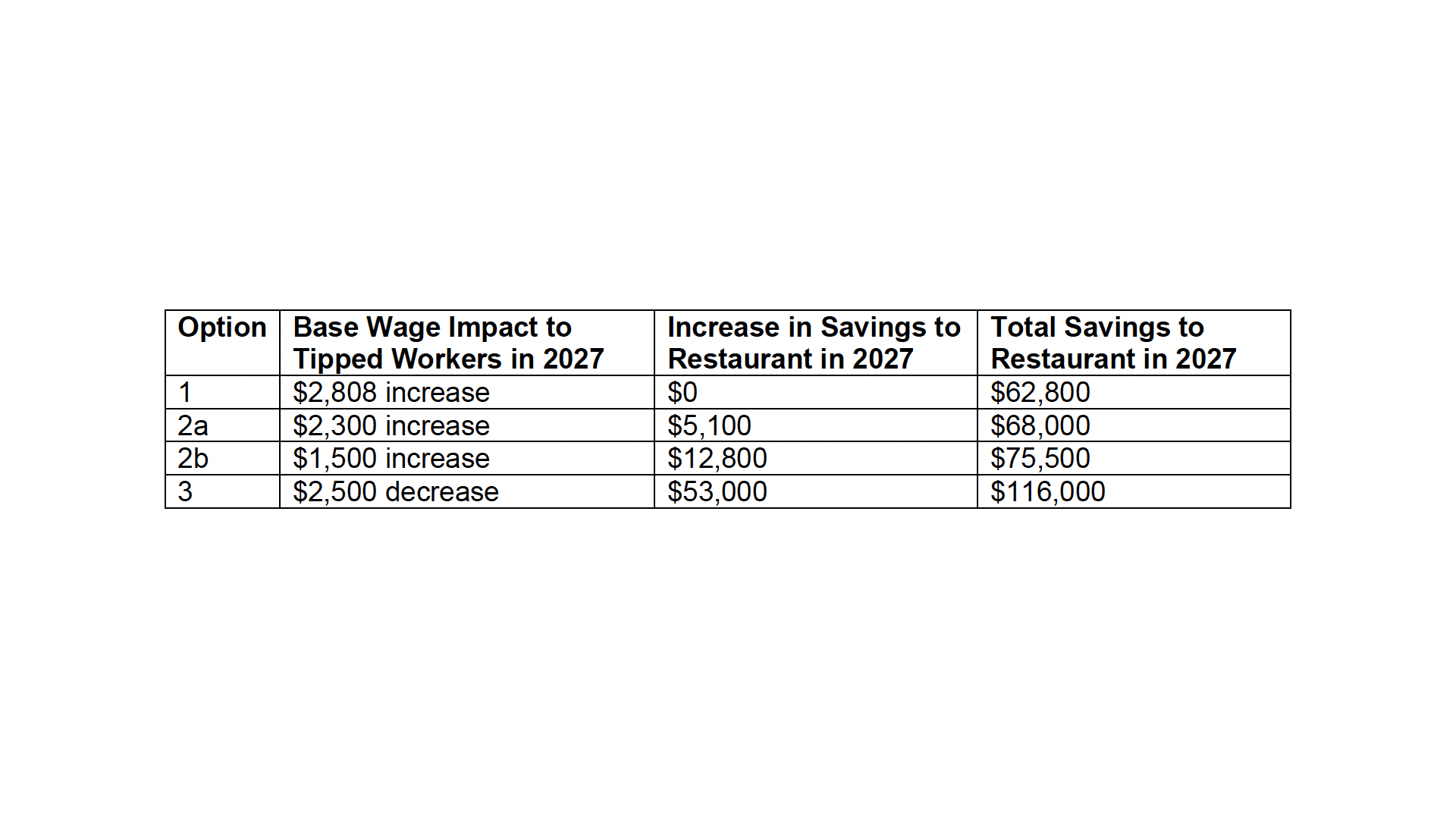
Staff presented four options for how to manage the tip credit moving forward, and Council used straw polls to signal which directions they want staff to continue exploring.
Option 1: Keep Tip Credit at $3.02 (Status Quo)
Votes in favor: Tina Marquis, Taishya Adams, Aaron Brockett, Nicole Speer, Ryan Schuchard
Tip credit stays flat
Base wages rise faster than minimum wage in 2027
Businesses do not gain additional relief over time
Reality: Costs keep rising, but the offset doesn’t keep pace
Option 2A: Moderate Increase
Votes in favor: Tara Winer, Mark Wallach, Matt Benjamin, Rob Kaplan, Tina Marquis, Aaron Brockett
Tip credit increases gradually by $0.25 in the first year and then gradually over time
Tracks with minimum wage growth
Reality: Base wages still increase at the same rate as minimum wage
Option 2B: Larger Increase
Votes in favor: Tara Winer, Mark Wallach, Matt Benjamin, Rob Kaplan, Tina Marquis
The tip offset increases by $0.62 in 2027 and then by CPI in the following years
This is the stronger relief option, but with clearer tradeoffs
Reality: Base wages still rise, but at a slower rate than minimum wage
Option 3: Maximum Tip Credit
Votes: None
Sets tip credit to the maximum allowed by the state
Reality: Strongest support for businesses. Largest shift of risk onto employees
Timeline Split
Staff had the timing of the Public Hearing vote set for June 18. They asked the council if this was approved and the result was to delay. This delay was requested for a few reasons, members of council want more data, they want more student representation at the public hearing, and the Mayor is out of town for the June date.
Move forward with June date: Tara Winer, Mark Wallach, Matt Benjamin, Rob Kaplan
Delay: Tina Marquis, Taishya Adams, Aaron Brockett, Nicole Speer, Ryan Schuchard
Jenny’s Take (Timing)
I fall firmly in the “move forward” camp. Delaying action doesn’t pause the pressure, it just means businesses absorb another year of rising costs without relief. Uncertainty is worse than change. Right now, restaurants and small businesses don’t know: What the policy will be, when it will change, or how to plan for it. That uncertainty makes it harder to hire, price, and operate.
The policy itself is incremental. None of the options on the table are extreme: No one supported the maximum (Option 3). The real choices are modest adjustments. This is exactly the kind of policy you should move forward on and refine over time.
Businesses are already adjusting (without help). Restaurants are already: Raising prices, cutting hours and reducing staff where they can. Delaying relief means those adjustments continue without any policy support. Waiting doesn’t protect anyone, it just guarantees higher costs hit first.
Jenny’s Take (Tip Credit Overall)
With wages increasing 8% next year and continuing upward: Doing nothing means the tip credit becomes less meaningful over time. The question isn’t whether to act, it’s how much to adjust the balance. From my perspective: Option 1 doesn’t hold the line, it actually allows pressure to build. Option 3 goes too far in the other direction. The real decision is somewhere in between. This is not a debate about whether to help businesses, it’s about how much relief is appropriate without overcorrecting.
It’s also worth noting that support for delay and lack of restaurant support came from some council members who, during prior campaigns, expressed strong support for Boulder’s restaurant community. These votes may feel misaligned with those earlier commitments, particularly for small business owners looking for near-term relief.
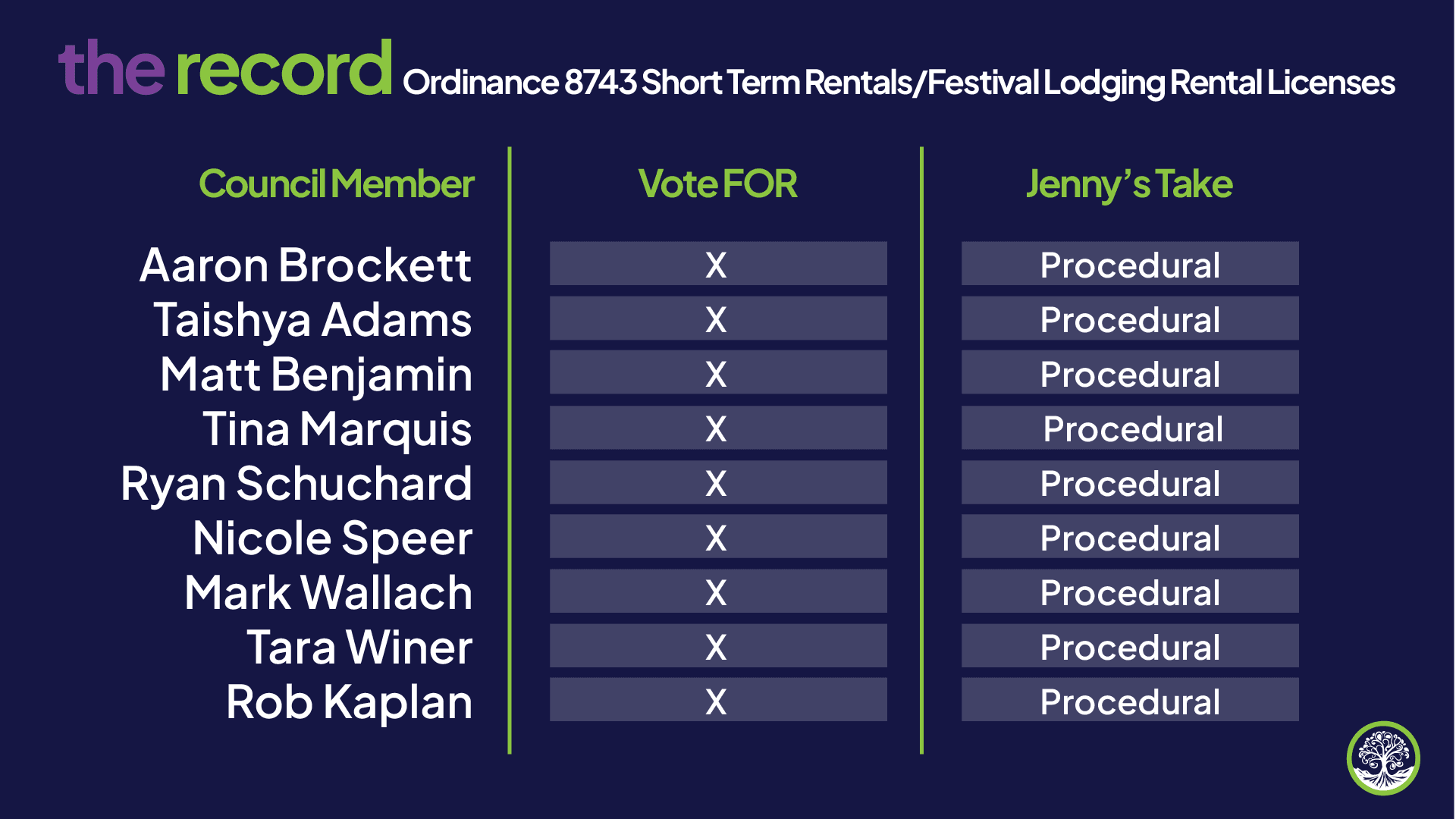
Public Hearing: Festival Amendment (Short-Term Rentals): Ordinance 8743 amending Sections 10-3-19, "Short-Term Rentals," permitting tenants to apply for Festival Lodging Rental Licenses and 4-20-18, ”Rental License Fee,” B.R.C. 1981, by adding an associated fee; and setting forth related details
Date of vote: 4/2/2026
Outcome: Unanimously Approved
Category: Procedural
What Happened
Council held a public hearing and unanimously approved the ordinance allowing tenants to apply for festival lodging rental licenses.
What It Means
This is actually a more significant shift than it might sound. The new license allows tenants (not just owners) to operate short-term rentals, requires property owner consent, applies to non-primary residences and vacant rentals, is limited to festival periods (+10 days before / +9 days after), and maintains safety and occupancy requirements. The intent is clear: Increase lodging supply during major events without turning housing into full-time short term rentals.
Jenny’s Take
This was a unanimous vote, but not necessarily a simple policy. On paper, it’s a targeted and reasonable expansion. It supports tourism, creates income opportunities, and keeps guardrails in place. But this only works with property owner consent. Lease agreements will need to evolve, owners and tenants will need to negotiate terms and questions around liability, revenue sharing, and control will come into play.
Things to watch:
Will landlords allow it or broadly prohibit it?
How will renters and owners structure agreements?
Does this create opportunity or friction?
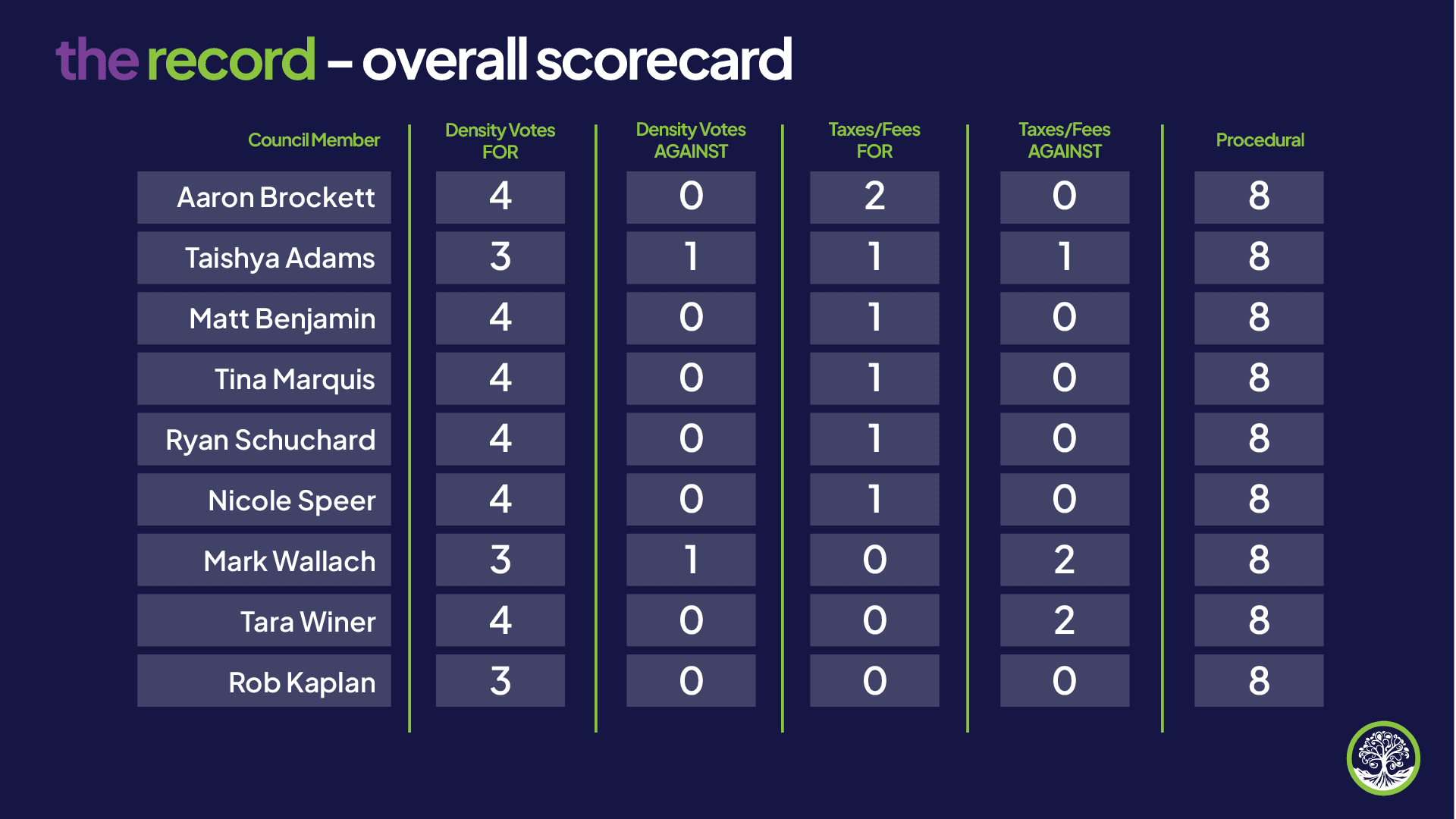
The Scorecard
The scorecard is the main tracker for major votes from each Council meeting. It will be updated every other week to keep you current on how Council decisions are shaping Boulder.
Thank you for reading!
Jenny
Founder, Jenny on the Record